Surviv.io: The Battle Royale That Fits in a Browser Tab
Battle royale games have a reputation for being demanding. Big downloads, steep hardware requirements, long queues, a learning curve that punishes newcomers for weeks before anything clicks. Surviv.io strips all of that away. No download, no install, no waiting. You open a browser tab and you’re in a match within seconds. The genre’s core tension — last player standing, shrinking zone, everyone trying to kill everyone else — survives the translation to a top-down 2D format better than you’d expect. In some ways it’s sharper for it.
What It Is
Surviv.io is a top-down multiplayer battle royale. You drop onto a map with nothing, loot buildings for weapons and supplies, and try to outlast everyone else while a red zone gradually pushes players toward the center. Last one alive wins.
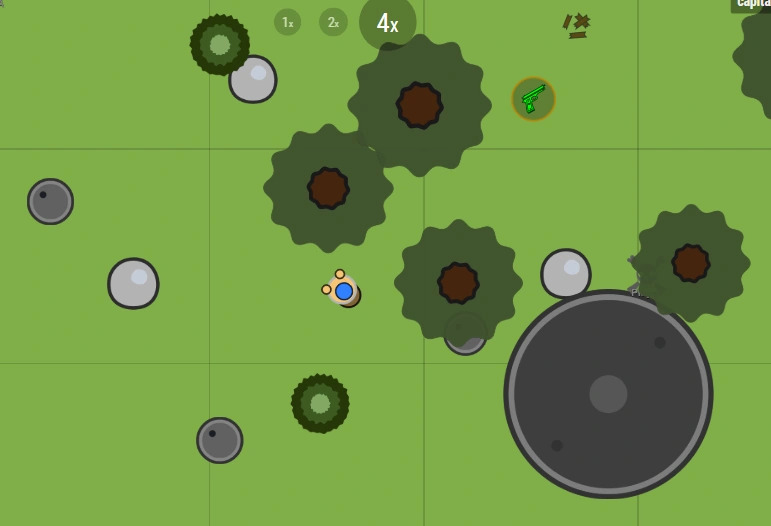
The top-down perspective changes the feel of the genre considerably. You can see more of your surroundings than a first-person game allows, which rewards map awareness and punishes tunnel vision. There’s no cover mechanic in the traditional sense — you’re moving around obstacles rather than pressing against them — and combat is faster and more exposed as a result.
Matches run short. Most games wrap up in five to ten minutes, which makes the session structure feel fundamentally different from longer battle royale formats. Losing doesn’t cost you much time. You’re back in a lobby immediately, ready to try a different approach.
The Loot Loop
Every match starts the same way — you have nothing and the map has everything. The opening minute is a race to find something useful before you run into someone who already has.
Buildings are where most loot lives. Moving through them quickly, checking corners, grabbing what you need and moving on is a skill that develops fast. Early game you’ll take almost anything. Mid-game you start making choices — do you carry this shotgun or save the slot for something better you might find? Does this armor upgrade matter enough to stop and swap?
Ammo management is a real consideration. Finding a strong weapon with no compatible ammo is worse than a mediocre weapon with plenty. Experienced players pick up ammo for weapons they don’t currently have, anticipating swaps later in the round. New players grab weapons first and discover the ammo problem after it’s too late.
Healing items are their own category of decision-making. Bandages are fast but limited in what they restore. Medkits take time to use but bring health back fully. Using a medkit at the wrong moment — mid-engagement, in an exposed position — gets you killed. Knowing when you’re safe enough to heal and when you need to keep moving is something you learn through painful experience more than any guide can teach.
The Zone
The red zone is borrowed directly from the battle royale template but works well in Surviv’s format. It starts wide and closes gradually, forcing players who’ve been hiding in safe corners to move toward the center and engage.
The pressure it creates is genuine. Being caught outside the zone isn’t an instant death sentence early on, but the damage accumulates fast enough that it forces movement. Watching the timer while you’re mid-loot in a building, deciding whether to push further in for one more room or start moving now — that’s the kind of low-stakes decision that somehow feels urgent.
Late game, when the safe zone is small and several players are compressed into a tight area, the zone stops being background pressure and becomes an active threat. You might be perfectly positioned relative to other players and still lose because you misjudged the timing. It adds a layer of chaos to the final stages that keeps outcomes unpredictable even when you’ve played well.
Combat
Surviv.io’s combat is fast and punishing. Health pools are low enough that engagements resolve quickly, which means starting a fight in a bad position is usually fatal rather than recoverable. Positioning before the first shot matters more than mechanical skill during the exchange.
The weapon variety covers the standard categories — pistols, shotguns, assault rifles, sniper rifles, melee options — and each fills a different role depending on range and situation. Shotguns are devastating up close and nearly useless at distance. Snipers reward patience and map awareness. Assault rifles are the reliable middle ground that works in most situations.
Most combat happens at medium range where the outcome depends on movement as much as aim. Strafing, using obstacles as brief cover, knowing when to push and when to back off — these decisions happen fast and the game is honest about punishing bad ones.
Solo vs. Squad Play
Surviv.io offers both solo and squad modes, and they’re different enough to feel like separate games sharing the same map.
Solo is pure individual survival. Every decision is yours alone, every mistake lands directly on you, and the satisfaction of winning is completely personal.
Squad play introduces coordination and the specific chaos that comes from it. Good squads communicate, cover different angles, revive downed teammates at the right moments. Random squads are a lottery — sometimes you get players who know what they’re doing, sometimes you spend the match watching teammates rush into situations that were obviously going to go wrong. Both outcomes are entertaining in their own way.
Why It Works
The format does a lot of the work. Short matches, immediate respawn, zero barrier to entry — these structural choices remove most of the friction that makes traditional battle royale games feel like a commitment. You can play three rounds of Surviv.io in the time it takes some games to finish loading.
But the game underneath the format is also genuinely solid. The loot system creates real decisions, the zone creates real pressure, and the combat is fast enough that mechanical skill matters without being so demanding that new players can’t participate meaningfully.
Final Thoughts
Surviv.io is the rare browser game that takes a complex genre and distills it into something that works without losing what makes the genre compelling in the first place. The tension of last-player-standing survival, the scramble for resources, the shrinking zone forcing confrontation — it’s all there, in a package that loads in seconds and asks nothing of your hardware.
If you’ve ever been curious about battle royale games but put off by the investment they typically require, this is the most painless possible entry point. And if you’re already a fan of the genre, it’s worth spending time with something that strips it back to its essentials.