





You sit down for ten minutes. Maybe you needed a break from something, or you were just killing time. Then somehow it’s an hour later and you’re still staring at a board of tiles, trying to figure out why you can’t quite clear that last corner. That’s pretty much the AARP Mahjongg experience in a nutshell.
It’s not a flashy game. There’s no soundtrack building to a climax, no leaderboard making you feel inadequate, no notification begging you to come back. It just… sits there, patient, waiting for you to figure it out. And for a lot of people, that’s exactly what makes it hard to put down.
So What Is It, Exactly?
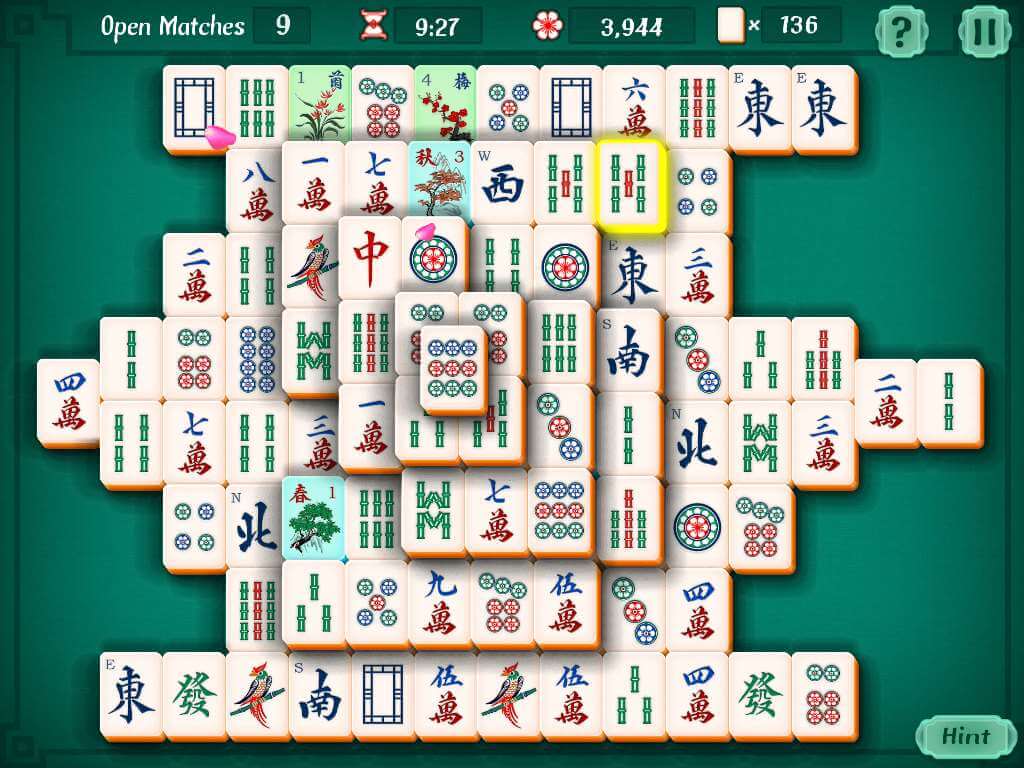
If you’ve never played, here’s the short version: it’s a solo puzzle game where you clear a board by matching pairs of identical tiles. Sounds simple, and honestly the basics take about thirty seconds to grasp. The catch is that a tile has to be “free” — nothing sitting on top of it, and at least one open side — before you can select it. That one rule is what turns a straightforward matching game into something that actually makes you think.
It’s loosely inspired by traditional Chinese Mahjong, but don’t let that confuse you. Traditional Mahjong is a four-player game full of strategy and psychology. This version strips all that away and turns it into a quiet, single-player logic puzzle. Different experience entirely, same visual language.
The AARP version specifically is built with a no-nonsense approach. No download, no account required, just open it in your browser and start playing. The tiles are clear and easy to read, the layout isn’t cluttered, and nothing gets in the way of just playing the game. It’s refreshingly straightforward.
Why It’s Harder to Stop Than You’d Expect
The thing about this game is that it doesn’t grab you the way most games try to. There’s no urgency. No timer counting down, no opponent making moves while you hesitate. You can stare at the board for two minutes thinking through your options and absolutely nothing bad happens. That’s an unusual feeling in a world where most apps are engineered to create a low-grade sense of panic.
What pulls you in instead is something slower — a rhythm you fall into without noticing. You start seeing the board not as a pile of tiles but as a structure with layers and dependencies. You start thinking two or three moves ahead without consciously deciding to. And when you clear a cluster that had been blocking everything? That moment of relief is small, but it’s real.
There’s something almost meditative about it when you hit a good stretch. Not in a pretentious way, just — you stop thinking about your to-do list. The board is the only thing that exists for a while. A lot of people find that genuinely useful, not just entertaining.
It Does Actually Exercise Your Brain
This sounds like the kind of thing someone puts on packaging to make a product seem more legitimate, but in this case it holds up. The game quietly works several things at once — you’re scanning for visual patterns, holding information about buried tiles in your head, and making decisions that have downstream consequences you can’t fully see yet.
The strategic part sneaks up on you. Early on you just match whatever’s available. After a while you start noticing that certain moves look good now but quietly close off options later. You begin thinking about the board as a whole system rather than a collection of individual pairs. That shift happens gradually and you barely notice it, but it’s real.
 A Few Things That Actually Help You Get Better
Most improvement at Mahjongg comes down to slowing down, not speeding up.
Before you make a single move, take a real look at the whole board. Spend twenty seconds mapping out where the deep piles are, where things seem locked up, what tiles appear in multiples. That quick scan shapes everything that follows.
When you’re choosing between two equally tempting matches, pick the one that opens up more of the board underneath. Clearing tiles that aren’t blocking anything important feels satisfying but often doesn’t actually help you.
Try not to get tunnel vision on one section. Players who focus too hard on one corner often find themselves stuck with an unsolvable mess on the other side.
Understanding the Tile Types
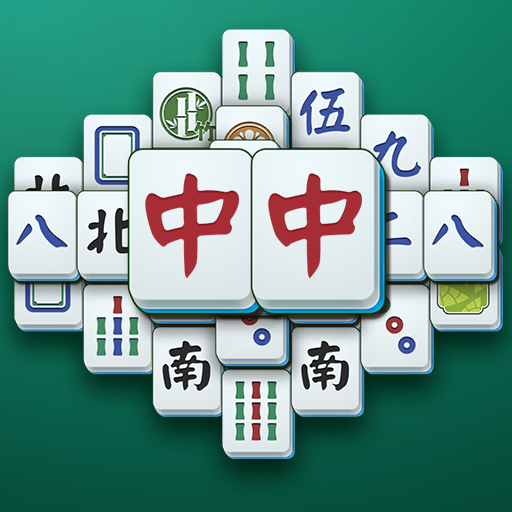
One thing that trips up newer players is not paying attention to what’s actually on the tiles. The standard set includes several categories worth knowing.
The suit tiles — Bamboo, Characters, and Circles — each come in values from one to nine and make up the bulk of the board. These are the tiles you’ll be matching most often, and learning to recognize them quickly rather than reading each one individually speeds up your scanning considerably.
Honor tiles are the other main category — Winds and Dragons. There are fewer of them, which makes matching pairs from this group either a relief or a problem depending on where they’re buried. When both copies of an honor tile are accessible early, clearing them is usually worth doing promptly.
Bonus tiles — Flowers and Seasons — vary by version of the game. In some implementations they match with any tile from the same bonus category rather than requiring an identical pair, which gives you a bit more flexibility when you find one.
None of this is complicated, but players who take a few minutes to get familiar with the tile categories tend to scan the board more efficiently. Instead of processing each tile from scratch every time, you start reading clusters — that’s a three of Bamboo, those are both Dragons — and the board becomes easier to navigate as a result.
The Different Board Layouts
One of the underappreciated things about AARP Mahjongg is the variety of board layouts available. Most players default to the classic Turtle or Dragon layout and stick with it, but the game offers significantly more variety than that.
Some layouts are open and forgiving — tiles are spread across a relatively flat structure, buried tiles are accessible without too many prerequisite moves, and the game rewards basic pattern matching more than deep planning. These boards are good for warming up or for sessions when you want something relaxed.
Others are tightly stacked pyramids or complex interlocking shapes where the entire board is essentially a dependency chain — clearing one section only becomes possible after methodically unlocking another. These layouts play completely differently and reward the kind of patient, structured thinking that the open boards don’t quite require.
If you’ve been playing the same layout repeatedly and it’s starting to feel routine, trying an unfamiliar shape is often enough to make the game feel new again. The rules don’t change, but your approach has to, and that adjustment is where a lot of the interest comes from.
When You Get Stuck
Every regular Mahjongg player knows the specific frustration of a board that has two or three tiles left and no valid moves. You’ve done most of the work, the board is nearly clear, and somewhere along the way a decision closed off the path to the finish.
Most versions of AARP Mahjongg offer a shuffle option for exactly this situation. It rearranges the remaining tiles into new positions, creating new potential matches without changing how many tiles are left. It’s not cheating — it’s a built-in feature — but experienced players tend to use it sparingly, treating a deadlocked board as information about what went wrong rather than just an obstacle to move past.
If you find yourself shuffling frequently, it’s usually a sign that the middle game is where things are breaking down. Either tiles are being matched without regard for what’s underneath them, or one section of the board is being neglected while another gets cleared prematurely. Paying attention to which tiles are still present when the board gets stuck helps identify the pattern.
The hint feature works similarly — useful when you’re genuinely unable to find a valid move, less useful as a substitute for looking carefully. Players who use hints to confirm a move they’d already identified are using them well. Players who reach for hints before scanning the board thoroughly are shortcutting a part of the process that’s actually worth doing.
How It Compares to Other Puzzle Games
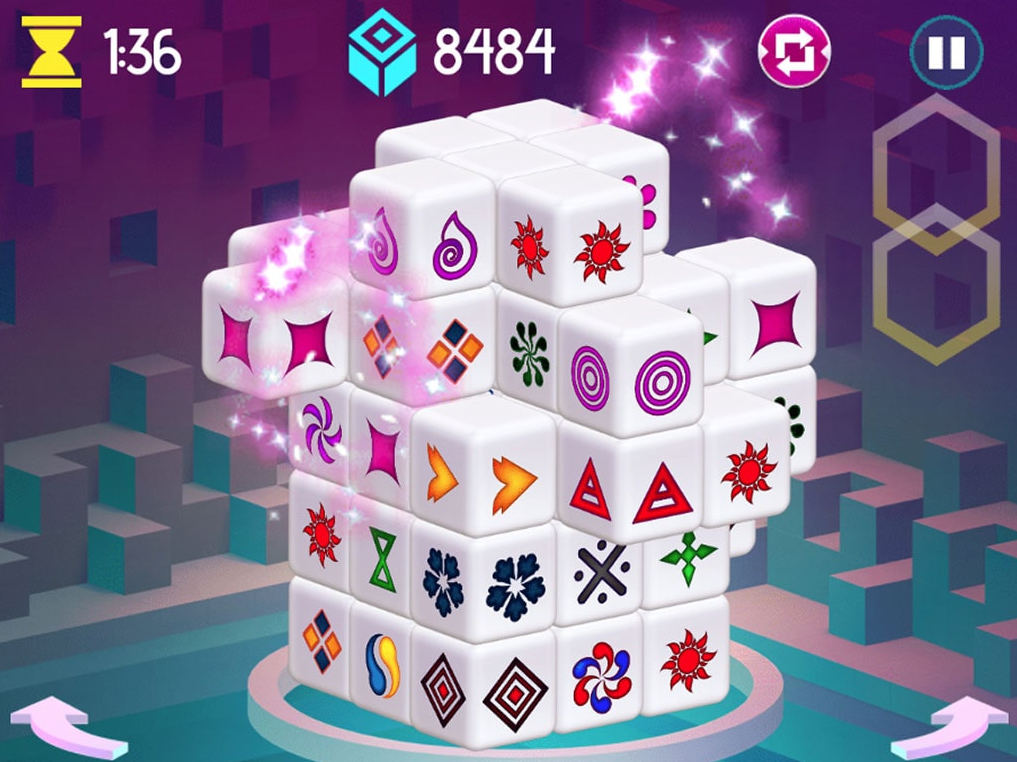
AARP Mahjongg occupies a specific spot in the puzzle game landscape that’s worth understanding. It’s more spatially demanding than Sudoku or crosswords, which are primarily about logic and word knowledge respectively. The visual component — reading a three-dimensional tile structure and tracking what’s accessible — is central in a way that makes it feel different from number or word puzzles even when the strategic thinking involved is similar.
Compared to card-based solitaire games, Mahjongg is more immediately visual and less dependent on sequential card management. Solitaire is largely about the order in which things happen — what gets placed on what, in what sequence. Mahjongg is more about reading a spatial structure and identifying dependencies. Both reward planning ahead, but the type of thinking they reward is meaningfully different.
That distinction matters for players trying to build a varied mental routine. Mahjongg and Sudoku together cover visual-spatial reasoning and logical deduction. Adding a word game covers a third type of cognitive engagement. The combination does more than any single game on its own, which is why a lot of regular puzzle players end up rotating between several rather than committing exclusively to one.
Playing It as a Daily Habit
A lot of people who play AARP Mahjongg regularly have settled into a pattern without really planning to. One game in the morning to warm up the brain. A session during lunch to step away from work for a few minutes. A board or two in the evening as a way to transition from the busyness of the day to something quieter.
These aren’t grand commitments — just small consistent slots where the game fits naturally. The sessions are short enough that they don’t feel like an investment, and regular enough that the pattern recognition and strategic thinking involved continue to develop over time.
If you’re trying to build a daily habit around it, the easiest approach is to attach it to something that already happens every day. Morning coffee, lunch break, the ten minutes before bed. The game is short and self-contained enough that it fits alongside existing routines without requiring its own dedicated time block.
Daily puzzle challenges, where available, add a small external structure to this. Knowing a new puzzle resets every morning gives you a specific thing to check back for, which can be enough to make the habit stick during the early weeks when it hasn’t become automatic yet.
Why People Keep Coming Back
The game fits oddly well into real life because it doesn’t demand a specific block of time or the right mood. Five minutes between meetings? Fine. An hour on a slow Sunday afternoon? Also fine. It scales to whatever you’re willing to give it.
For a lot of regular players it becomes something like a small ritual — not an obsession, just a consistent little thing that provides a bit of focus and a manageable challenge. In a day full of things that feel unresolved, finishing a Mahjongg board offers something rare: a clear, unambiguous sense of completion.
That might sound like a small thing. But small things, done consistently, add up to more than you’d think.
A Few Frequently Asked Questions
Do I need to download anything to play AARP Mahjongg?
No. It runs entirely in your browser. Open the page and you’re playing within seconds.
Is it free?
Yes, completely free. No account required, no subscription, nothing to purchase.
Can I play on my phone?
Yes. The game works on mobile browsers and adjusts to smaller screens without losing playability.
What if I run out of moves?
Most versions offer a shuffle option that rearranges remaining tiles and creates new possible matches. There’s also typically a hint feature that highlights a valid pair when you can’t find one.
Is there a timer?
Some versions include an optional timer for scoring purposes, but it doesn’t end your game. You can play at whatever pace works for you.
Do I need to know traditional Mahjong to play?
Not at all. The games share visual elements but play completely differently. AARP Mahjongg Solitaire is self-contained and makes sense on its own terms without any prior knowledge of the traditional game.